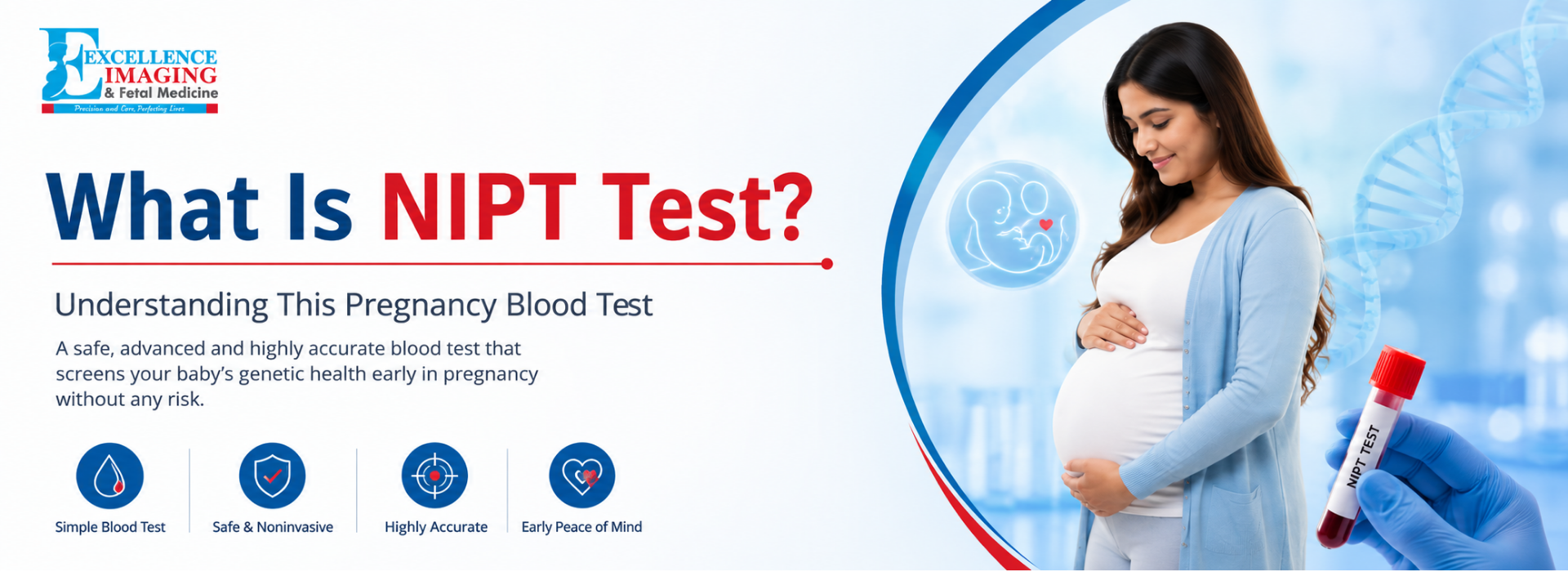
NIPT stands for noninvasive prenatal testing, which is an advanced medical milestone for
expecting mothers. This smart method helps you check your baby's health safely right from the
early months.
If you are confused about “what is the NIPT test” process is, this guide is for you. It tells you
everything about this safe screening test for pregnancy without any extra complex words.
What is NIPT Test?
This is a highly accurate prenatal genetic screening option done using a simple maternal
blood sample. It looks for genetic anomalies in the fetus by screening tiny DNA parts
present in the mother’s blood.
This modern NIPT blood test is gaining massive popularity among couples across India today.
It provides deep genetic clarity through a simple blood test during pregnancy without any
stress or discomfort.
Why Is This Screening Test for Pregnancy Important?
Every family wants a healthy child and a completely smooth pregnancy journey. This early
screening test for pregnancy helps you track vital health details right from the beginning.
It provides highly accurate answers without causing any harm to your baby. This safe prenatal
testing option removes fear and helps parents take the right medical steps at the right time.
What Conditions Does Prenatal Genetic Screening Cover?
The main reason for doing this detailed prenatal genetic screening is to track chromosomal health. Any missing or extra chromosome can cause serious developmental issues for the child.
Down Syndrome (Trisomy 21)
This is one of the most common conditions checked during routine pregnancy health screening.
It happens due to an extra chromosome 21, which can lead to developmental and intellectual
delays in children.
Spotting this early with a timely
NIPT test in pregnancy
helps parents and doctors plan better care.
Edwards Syndrome (Trisomy 18)
This condition occurs when an extra copy of chromosome 18 appears in the fetus. It may lead
to severe structural abnormalities and developmental complications during pregnancy.
Early detection gives your healthcare team the opportunity to guide your family properly.
Patau Syndrome (Trisomy 13)
Patau Syndrome is a rare chromosomal disorder caused by an extra copy of chromosome 13.
It can result in major physical and intellectual challenges for the baby.
This early screening gives families enough time to understand future medical support and care.
How Is This Blood Test During Pregnancy Done?
The process of this blood test during pregnancy is simple, painless, and completely safe.
No fasting or complicated preparation is required before the test.
A trained medical professional collects a small blood sample from the mother’s arm. The
sample is then sent to a specialized laboratory for advanced genetic testing and analysis.
Who Needs a NIPT Test in Pregnancy?
Although this advanced screening is available for all pregnant women, doctors especially
recommend it for mothers above the age of 35.
Higher maternal age naturally increases the chances of chromosomal abnormalities. Women
with a family history of genetic conditions or abnormal ultrasound findings may also benefit
from this screening.
Benefits of NIPT Screening
- Completely non-invasive and safe for the baby
- Highly accurate prenatal screening method
- Can be done after 10 weeks of pregnancy
- Early detection of chromosomal abnormalities
- Simple blood test with no recovery time
- Helps parents make informed healthcare decisions
Why Choose Excellence Imaging and Fetal Medicine?
At Excellence Imaging and Fetal Medicine, we combine advanced laboratory technology with
compassionate pregnancy care for every expecting mother.
Our expert specialists ensure that every sample is processed with complete accuracy and
precision. We do not just provide reports — we explain every detail clearly so parents feel
confident and supported throughout their journey.
Frequently Asked Questions
1. When can I get this pregnancy blood test done?
You can schedule this test anytime after completing 10 weeks of pregnancy.
2. Is there any risk of miscarriage with this testing?
No, it is completely non-invasive and carries no miscarriage risk for the baby.
3. How long does it take to get the lab results?
Usually, detailed reports are available within 7 to 10 working days.
4. Can this screen for all types of genetic disorders?
No, this test mainly screens for common chromosomal conditions like Down Syndrome, Edwards Syndrome, and Patau Syndrome.
5. What if my screening report shows a high-risk result?
A high-risk result is not a final diagnosis. Your doctor may recommend additional diagnostic testing such as amniocentesis for confirmation.