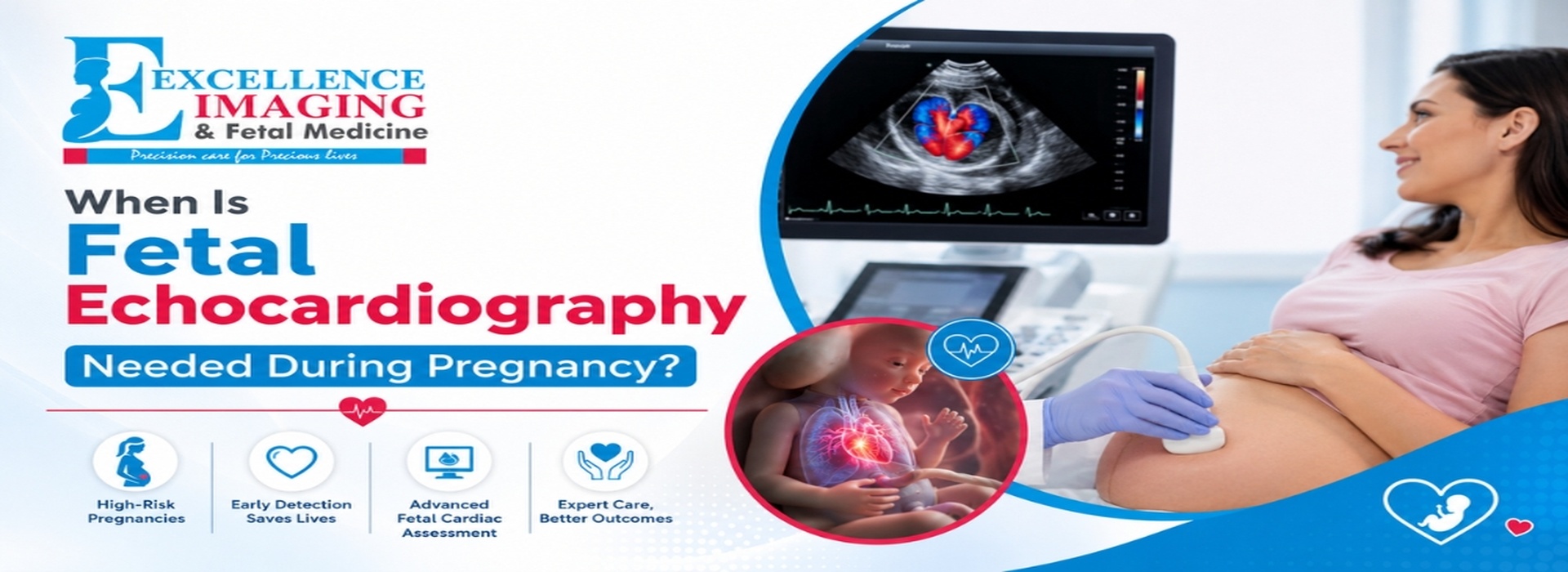
Pregnancy scans help doctors monitor the baby’s growth and overall development. Among these important tests, fetal echocardiography is a specialized scan that focuses on evaluating the baby’s heart during pregnancy. This advanced fetal heart ultrasound provides detailed images of the baby’s heart structure, blood flow, heart rhythm, and cardiac function.
At Excellence Imaging & Fetal Medicine, specialists perform advanced fetal echocardiography using high-resolution imaging technology for accurate prenatal diagnosis and expert pregnancy care.
What Is Fetal Echocardiography?
Fetal echocardiography is a specialized ultrasound test used to examine the baby’s heart during pregnancy. Unlike a regular pregnancy scan, this test specifically focuses on fetal cardiac health and helps doctors identify heart-related abnormalities before birth.
Doctors use this baby heart scan to evaluate:
- Heart chambers
- Blood flow
- Heart valves
- Heart rhythm
- Cardiac development
Why Is a Fetal Echo Test Important?
Some heart conditions may not appear clearly during a routine pregnancy ultrasound. A detailed fetal heart ultrasound helps doctors identify these conditions early and supports better pregnancy management.
Early diagnosis can help with:
- Better pregnancy monitoring
- Early medical planning
- Improved newborn care
- Timely specialist consultation
- Better delivery preparation
Fetal echocardiography also provides reassurance when doctors require a more detailed evaluation of the baby’s heart.
When Do Doctors Recommend Fetal Echocardiography?
Doctors may recommend fetal echocardiography when certain medical conditions or scan findings increase the risk of fetal heart abnormalities.
1. Abnormal Pregnancy Scan Findings
If a routine anomaly scan shows concerns related to the baby’s heart, doctors may advise a fetal echo test for a more detailed evaluation. This allows specialists to examine the fetal heart more accurately.
2. Family History of Heart Defects
A family history of congenital heart disease may increase the possibility of fetal cardiac abnormalities. Doctors often recommend fetal echocardiography if parents or siblings have a history of heart defects.
3. High Risk Pregnancy
Women with high-risk pregnancies may require additional fetal monitoring. Doctors may advise fetal echocardiography in cases involving:
- Diabetes
- High blood pressure
- Autoimmune disorders
- Thyroid disease
- Pregnancy complications
4. IVF Pregnancy
IVF pregnancies sometimes require closer fetal assessment. Doctors may recommend a fetal heart ultrasound for detailed cardiac evaluation during pregnancy.
5. Abnormal Genetic Screening Results
If tests such as NIPT indicate possible chromosomal abnormalities, doctors may suggest fetal echocardiography for further evaluation. Some genetic conditions are associated with congenital heart defects.
6. Exposure to Certain Medications or Infections
Certain medications or infections during pregnancy may affect fetal heart development. A fetal echo test helps doctors monitor the baby’s heart more carefully in these situations.
What Happens During a Fetal Heart Ultrasound?
A fetal echocardiography scan works similarly to a regular pregnancy ultrasound. The specialist applies gel on the abdomen and uses an ultrasound probe to capture detailed images of the baby’s heart.
The procedure usually takes around 30 to 60 minutes depending on the baby’s position and scan complexity.
During the scan, specialists evaluate:
- Heart chambers
- Blood circulation
- Major blood vessels
- Cardiac rhythm
- Heart function
The scan is completely painless and non-invasive.
Is Fetal Echocardiography Safe During Pregnancy?
Yes, fetal echocardiography is considered safe for both the mother and baby because it uses ultrasound technology instead of radiation. Doctors worldwide use fetal echo tests as a standard prenatal diagnostic tool during pregnancy.
How Accurate Is a Fetal Echo Test?
Fetal echocardiography offers high diagnostic accuracy when experienced fetal medicine specialists perform the scan using advanced imaging equipment.
The accuracy may depend on:
- Baby’s position
- Pregnancy stage
- Maternal health conditions
- Type of cardiac abnormality
Can Fetal Echocardiography Detect Congenital Heart Disease?
A fetal heart ultrasound can detect many major congenital heart defects before birth. Early diagnosis helps doctors plan newborn care and specialized treatment if needed.
Some minor heart conditions may become more visible after delivery as the baby’s circulation naturally changes after birth.
Why Early Diagnosis Matters
Early diagnosis through fetal echocardiography gives families more time to understand the condition and prepare for proper medical care. Many fetal heart conditions can be managed successfully with timely diagnosis and expert neonatal support.
Frequently Asked Questions
When should fetal echocardiography be done?
Doctors usually perform fetal echocardiography between 18 and 24 weeks of pregnancy.
Is a fetal echo test different from a regular pregnancy ultrasound?
Yes, a fetal echo test specifically focuses on the baby’s heart structure and cardiac function.
Is fetal echocardiography painful?
No, the procedure is painless and non-invasive.
How long does a fetal heart ultrasound take?
Most scans take around 30 to 60 minutes.
Can fetal echocardiography detect heart defects before birth?
Yes, the scan helps identify many congenital heart abnormalities during pregnancy.
Book Your Fetal Echocardiography Scan in Delhi
Looking for expert fetal echocardiography and advanced pregnancy imaging in Delhi? Connect with Excellence Imaging & Fetal Medicine for accurate diagnosis, compassionate care, and specialized fetal medicine support during every stage of pregnancy.